Advertisement
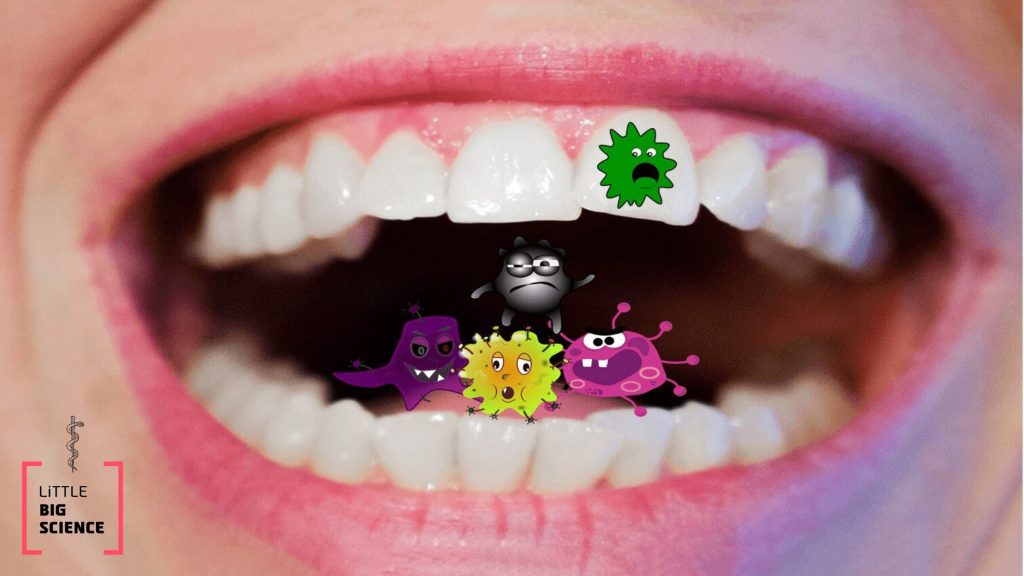
Your local dental hygienist has probably made you feel guilty about not flossing properly, warning you about bacteria that cause tooth decay. It turns out that it is not only tooth-decay causing bacteria that reside in your mouth. In fact, the human oral cavity contains a large and diverse community of about 10,000 species of microorganisms (bacteria, archaea, fungi, and more). Together, these are defined as the oral microbiome. For bacteria, our mouth is like an all-inclusive 5-star resort. It offers a variety of places to settle—teeth, gums, tongue, hard palate, and soft palate—so that different microorganisms can find a comfortable niche in which to multiply. In addition, it has a unique feature: alongside the mucosal layer, which is a constantly renewing habitat, there are the teeth—a hard, permanent surface that allows bacteria to accumulate and thrive in large numbers. It is warm and moist, exactly the way many bacteria like it, and the cherry on top is an endless food supply—from the food we eat to components already present in the mouth, such as salivary proteins, glycoproteins, and gingival crevicular fluid.
A true “paradise for microorganisms”.
Throughout history, various changes have influenced the composition of the oral microbiome: the addition of refined sugar to the human diet led to the proliferation of bacterial species resistant to the acidic by-products of carbohydrate metabolism; changes in oral hygiene habits that began in the late 19th century in the Western world; and the introduction of antibiotics in the 20th century.
Many factors can affect the composition of the oral microbiome—genetic and immune factors, as well as diet, smoking, oral-hygiene habits, changes in salivary secretion or salivary protein activity, antibiotic use, and diseases such as diabetes. All of these can contribute to a state of dysbiosis in the oral cavity.
What is dysbiosis? The microorganisms that inhabit our bodies can be divided into symbionts (live in a mutually beneficial relationship with our body), pathogens (disease-causing), and commensals (inconsequential, neither harmful nor beneficial). A disturbance of the body’s symbiotic balance is called dysbiosis. In dysbiosis, the microbiome can cause disease, as we know well in the oral cavity—for example cavities and gum inflammation. Beyond the damage caused in the mouth, dysbiosis can also affect overall health. Studies link gum disease to an increased risk of cardiovascular disease, stroke, diabetes, preterm birth, and more. Severe gum disease has also been found to impair glycemic control in people with or without diabetes, and there is a dose-response relationship between the severity of gum disease and the extent of diabetic complications.
Fun Fact: A small study published in 2004 found that among couples who frequently share French kisses, the composition of the salivary microbiome was more similar. While most of the salivary microbiome does not persist for long because saliva is constantly replaced, some microorganisms may manage to colonize the posterior tongue. The microbiome composition on the posterior tongue was more similar between partners than between strangers, but it did not correlate with the reported frequency of kissing.
English editing: Elee Shimshoni
References: