In biology, transformation is a phenomenon in which bacteria acquire new traits after they are exposed to the genetic material of other bacteria. This phenomenon was defined by the scientist Frederick Griffith, whose research demonstrated that genes or traits are passed on through biological matter. Later, a scientist named Oswald Avery and his colleagues showed that DNA is that matter, storing traits of living organisms.
Advertisement
If you would ask a biologist to figure out how a radio works, they would most likely answer that they would remove a different part each time and see what that breaks. This approach has accompanied biological research for a long time.
In a previous post [1] we told you about Frederick Griffith’s experiment, which demonstrated that the traits of living organisms are stored in some sort of material.
Briefly, in 1928 Griffith worked with two types of bacteria of the same species, Streptococcus pneumoniae. One type, S (from “Smooth”—it grows in culture as smooth, shiny colonies), is virulent and causes disease and death in mice. The second type, R (from “Rough”—it grows in culture as wrinkled, matte colonies), is non-virulent and does not kill mice.
Griffith showed that injecting a mixture of heat-killed S cells together with live R cells into a mouse causes its death, and that live S cells can be isolated from it. Griffith called the change of harmless R cells into disease-causing S cells “transformation”, a phenomenon in which bacteria acquire traits from other bacteria by being exposed to hereditary material present in the dead bacteria.
In those days, his results were considered groundbreaking, yet one significant question remained unanswered: What is the magical substance that stores the traits of living creatures?
In Griffith’s era, scientists believed that hereditary material resided in proteins. This assumption was accepted because of advances in biochemistry, which focused mainly on the activity of enzymes and proteins. The high abundance of protein in living organisms and the wide variety of functions proteins perform led to the (inaccurate) assumption that proteins play a role in trait inheritance. Other substances such as DNA and RNA (nucleic acids) were known to exist, but their roles were not characterized, so they were not considered functionally important for the cell.
That changed in 1944, when Oswald Avery [2], Colin MacLeod, and Maclyn McCarty published a paper [3] that advanced our understanding of the nature of hereditary material. To answer the question of which substance is responsible for transformation, Avery added a preliminary step to Griffith’s original experiment: He removed a specific biological component from the broth of heat-killed S cells before mixing it with R cells. Avery tested whether the presence of each of the cell’s three main components—proteins, RNA, and DNA—could influence the conversion of R cells into S cells. These components can be broken down using enzymes with specific activity: protease breaks down protein, RNase breaks down RNA, and DNase breaks down DNA.
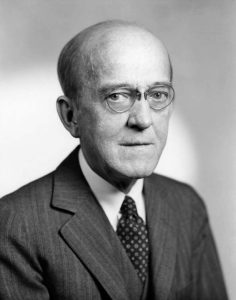
Oswald Avery. Source: Encyclopedia Britannica
Avery’s hypothesis was that without the substance containing the traits of S bacteria, mixing the broth of killed S cells with live R cells would not cause transformation (the conversion of R to S).
After degrading a different biological component each time, Avery mixed the new broth with live R cells and plated them. Again, the question was which component is responsible for transformation, or in other words—in the absence of which substance will S cells not grow.
In the test tube containing RNA-degrading enzymes, R cells turned into S cells, meaning that RNA is not the substance responsible for the process. To researchers at the time, this result was not particularly surprising. They later discovered that RNA is responsible for protein synthesis in the cell, so without RNA a cell cannot survive.
In the tube containing protein-degrading enzymes, R cells turned into S cells without difficulty, showing that proteins are also unnecessary for the process! This result was quite surprising, given the importance of proteins in the cell. Even today we know that proteins are essential for life, and even viruses, which do not replicate on their own, need protein activity in the infected cell to replicate. Yet according to Avery’s results, proteins play no role in converting R cells to S cells.
At first glance this seems illogical: Proteins are large biomolecules that perform very important functions in the cell, such as catalyzing chemical reactions, generating energy, utilizing energy, and transporting substances into and out of the cell. How could such a vital component for life not contain the material that preserves the organism’s traits?
In retrospect, heating not only kills the bacteria but also damages protein function at the molecular level. This fact alone could have hinted that proteins are not significantly involved in transformation.
The answer was in the final test tube, which contained DNA-degrading enzymes. From this tube no S cells grew at all, leading to the conclusion that DNA is the substance that stores the traits of living organisms. Like RNA and proteins, DNA is essential for cell survival. But unlike RNA and proteins, without DNA traits cannot be transferred from one organism to another.
Avery’s proposal, like any far-reaching scientific discovery, was not welcomed with open arms by the scientific community, due to the prevailing belief in the importance of proteins. Until then DNA had been considered merely a substance that happened to exist in the cell without practical significance. Avery’s experiment was the first to suggest that DNA has a crucial role—it is the material that contains hereditary information in living organisms.
Even today, biological research uses the approach of removing specific components from a system to see whether and how it changes. In Avery’s work, the manipulation targeted major cellular components, whereas today we can delete a single gene or create a mutation that disrupts only one protein’s activity. Yet despite the technological difference and the precision with which we can modify a biological system, we still rely on the same lines of thought that led Avery and his colleagues in 1944 to discover what the instruction manual for creating life is made of.
Hebrew editing: Smadar Raban
English editing: Elee Shimshoni
References:
Adam holds a Master’s degree in Biology from Ben-Gurion University. He is currently enrolled in an MD-PhD program in medicine and biomedical research at the Hebrew University, where he researches coping mechanisms for neurodegenerative diseases.


