
Advertisement
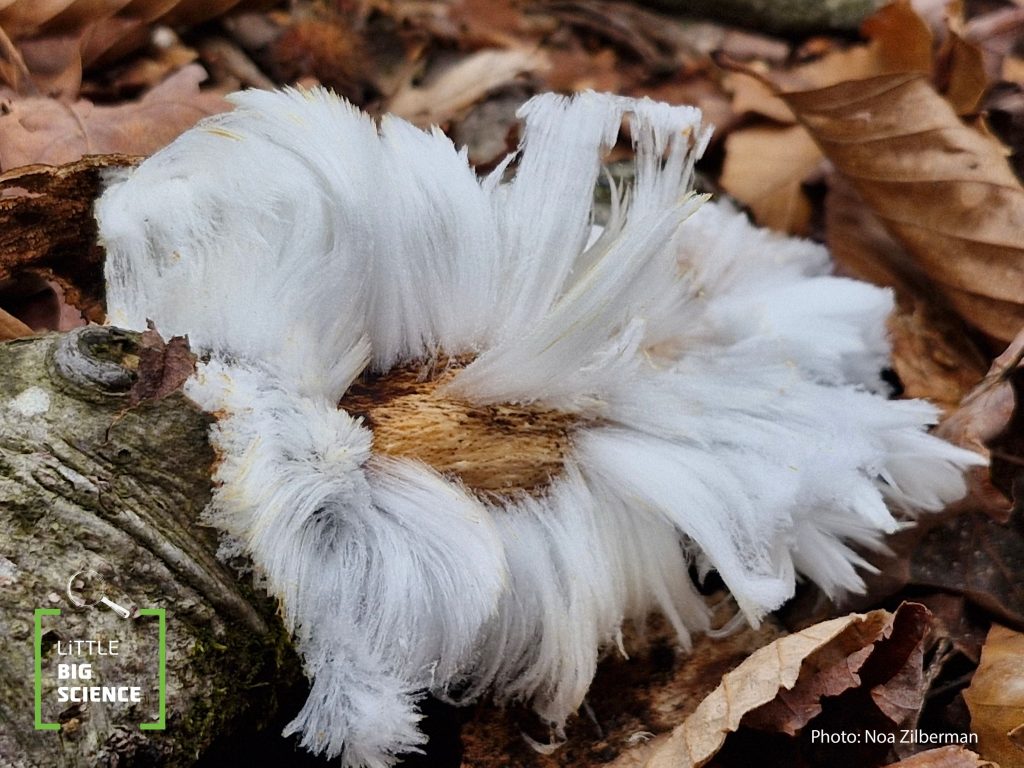
In the photo: “hair ice”—a spectacular and rather rare phenomenon. The picture was taken last week on a decaying tree trunk in a forest in New York State. Despite its furry appearance, it is actually composed of fine, delicate ice filaments. Hair ice is not the product of ordinary freezing; it forms only when several conditions occur simultaneously: a temperature just below zero centigrade, high humidity, and… the presence of a unique fungus—Exidiopsis effusa—living inside the decomposing wood. In the nighttime cold, water within the wood diffuses outward and instantly freezes into thousands of slender filaments. The fungus secretes substances that stabilize the structure and prevent the formation of ordinary ice crystals, giving rise to the furry-looking entity in the image.
Interestingly, the first to study the phenomenon was Alfred Wegener. If the name sounds familiar, it is because he is considered the father of plate-tectonics theory. More than a century ago, Wegener hypothesized that some fungus was involved in stabilizing the delicate ice hairs, yet only in 2015 [1] was the specific fungus responsible for the phenomenon identified—confirming his hypothesis, even though the precise mechanism has yet to be fully uncovered.
Photography: Noa Zilberman
Hebrew editing: Smadar Raban
English editing: Elee Shimshoni
References:
- Hofmann D, Preuss G, Mätzler C (2015). “Evidence for biological shaping of hair ice”. Biogeosciences. 12 (14): 4261–4273

Noa holds a PhD in Physics from the Technion and is currently a postdoctoral researcher at the Princeton Gravity Initiative at Princeton University. Her research focuses on quantum effects on black hole backgrounds. She also serves as a scientific editor at “Little, Big Science".


