Advertisement
Classical evolutionary questions generally focus on how animals pass their genes on to subsequent generations. Therefore, sexual behavior that does not lead to reproduction has often been regarded as a puzzle or a random by-product. However, a new analysis of data from 59 primate species (including the great apes) invites us to rethink this paradigm.
The study, published in Nature Ecology & Evolution, found that same-sex sexual behavior, i.e., sexual behavior between females only or between males only, is not random. Moreover, it is documented in genetically distant species living in different parts of the world, suggesting that it either evolved independently across the phylogenetic tree or originated from an ancient genetic root in primate evolutionary history.
It was also found that this behavior is especially common in primate species living under stress, such as:
* Environmental stress—in arid regions and in areas where water and food resources are scarce, making cooperation between individuals a likely necessity for survival.
* Social stress—in groups whose social structure includes rigid hierarchies and classes, where there may be a need to alleviate tensions [1–2].
For example, a previous study showed that among rhesus macaques (Macaca mulatta), same-sex behavior is common between males. The researchers hypothesize that this behavior helps create and strengthen social alliances and improves the males’ status within the group. The results indicate that same-sex behavior enables males to establish strong social bonds, which in turn provide them with more opportunities to mate with females in the group and produce offspring [3]. In other words, same-sex behavior may play an indirect role in mating and reproduction. This raises the question of whether same-sex behavior contributes to reproductive success and was therefore selected-for during evolution. According to this study, the answer appears to be yes, but additional research across different animal groups is needed to substantiate the claim comprehensively.
Back to the current study: on a broader scale, same-sex behaviour in primates seems to act as a kind of social “glue”. In many primates, this sexual behavior serves to reinforce bonds, build trust, and improve cooperation within the group—an alternative for expending energy on internal struggles.
These new findings indicate that, in at least a double-digit number of primate species, the ability to engage in same-sex relationships is a trait that has been selected-for because it confers a survival advantage. It enables life in larger, more cohesive communities, navigation of multi-tiered social structures, and group resilience even in less hospitable environments.
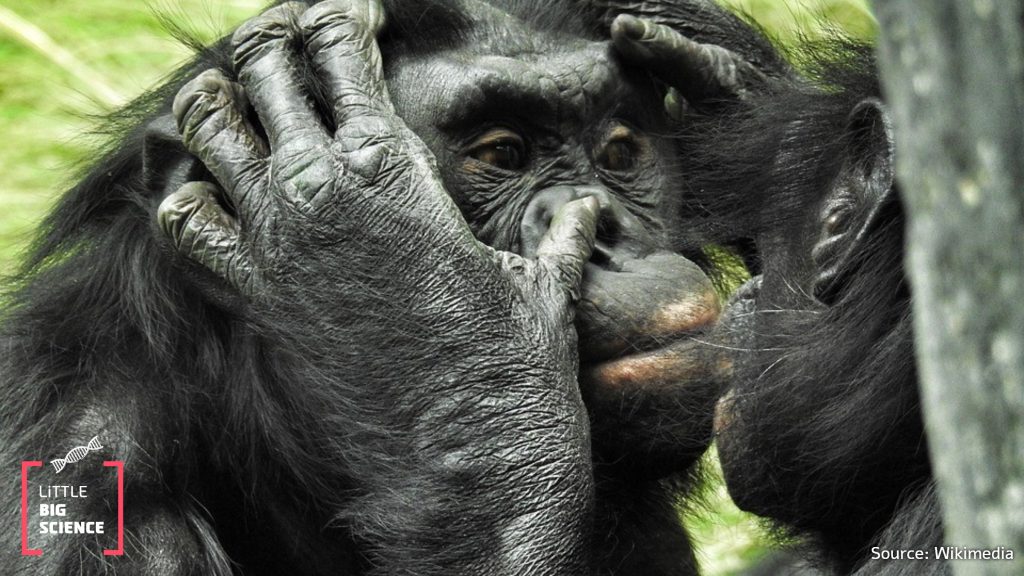
Cover image: Bonobos at the San Diego Zoo (source: Wikimedia).
Hebrew editing: Smadar Raban
English editing: Elee Shimshoni
Sources

Maya serves as Scientific Director at "Little Big Science". Maya is a zoologist and an entomologist with a PhD from Tel-Aviv University, currently working as a postdoctoral researcher in the Florida Museum of Natural History, at the University of Florida. Her research focuses on social insects - especially ants - and covers topics such as ecology and invasive biology.


