Humans safeguard species of animals, plants, and even non-living nature in various ways, such as establishing nature reserves and parks, yet sometimes, precisely when they intervene, they can cause unforeseen damage. When it comes to protecting the giant sequoia trees, it is not enough to prevent their logging; a little fire here and there is crucial.
Advertisement
Sequoia trees are among the largest and most impressive trees in the world. The trunk diameter of the giant sequoia, Sequoiadendron giganteum, can reach about 10 meters, and they can stand up to about 90 meters tall. Sequoia trees can live to 3,000 years. They grow naturally in California’s Sierra Nevada mountain range.
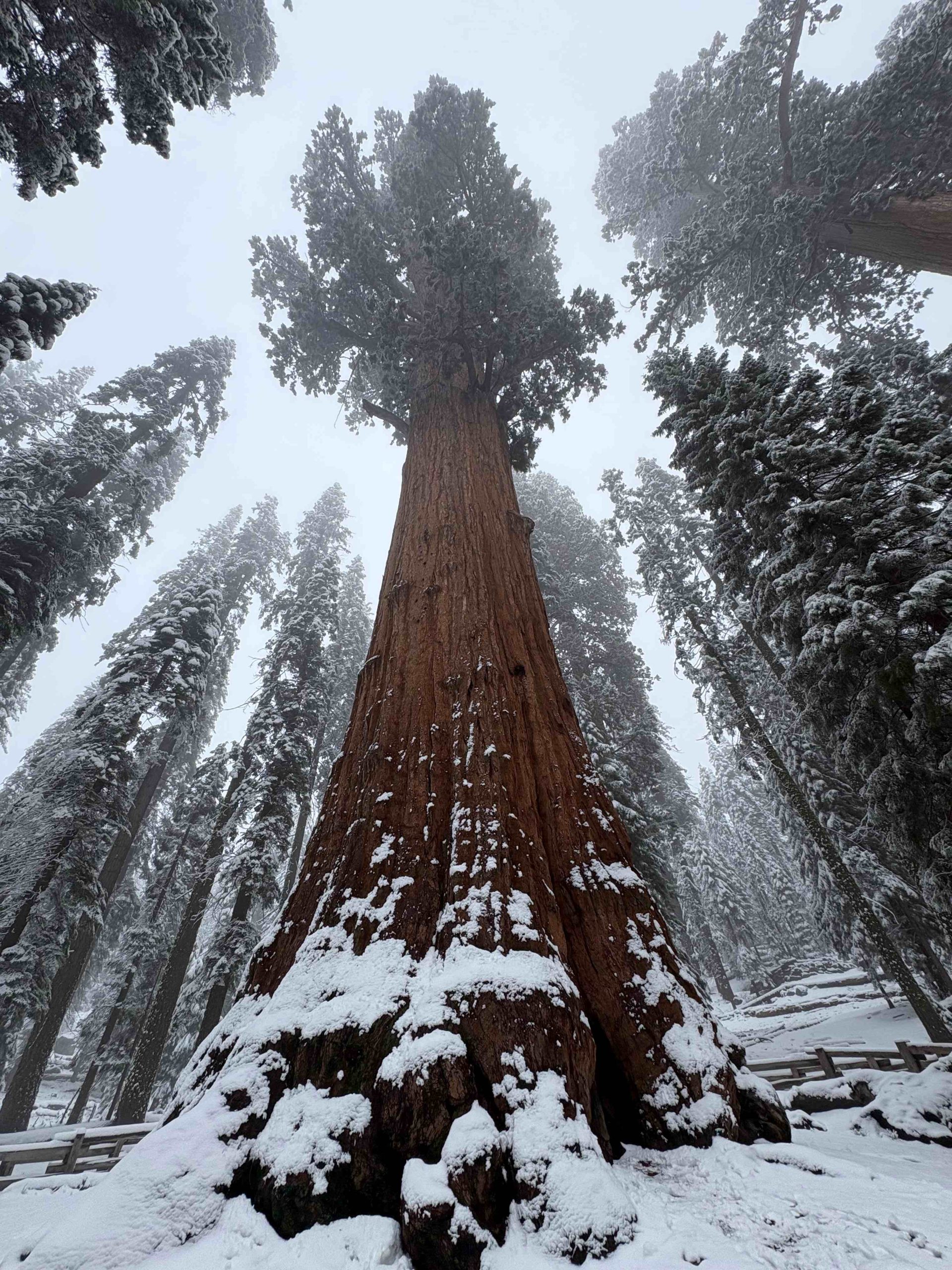
Image 1: Giant sequoia in snow, April 2026. Photo: Coral Cohen Zolkov
After widespread logging of sequoias, the United States established national parks to protect them [1], but real preservation requires more than that. Many Americans were raised on the saying “Prevent forest fires,” meaning that every forest fire should be stopped, based on the idea that fires are inherently destructive. Today the approach has changed, and the emphasis is on preventing destructive, uncontrolled fires—soon you will understand why.
Sequoias are coniferous trees that bear cones. Despite their enormous size, their cones are smaller than those of pine trees. Seeds, responsible for the tree’s reproduction, are tucked between the cone scales. Cones can remain on the tree for many years, sometimes two decades, and only under certain conditions do they dry, open, and release their seeds, especially after exposure to high heat.
Just as various animals and plants have unique adaptations to their environment, sequoias have remarkably adapted—to forest fires. Many tree species are fire-adapted: some, like eucalyptus, can regenerate rapidly after burning, and others germinate better following heat. Sequoias, however, stand out because they both survive fires exceptionally well and depend on them for natural regeneration.
We usually think of fire as a destructive process, and in many cases that is true, but for sequoias, natural fires—most often ignited by lightning—are part of the ecological system that allows them to exist. Fire heats and dries the cones, releasing the seeds, while simultaneously clearing the ground of competing vegetation and leaving bare soil suitable for germination [2]. Even so, only a tiny fraction of the seeds—less than one percent—will grow into trees. Without periodic fires, this percentage drops even further and sometimes there is almost no regeneration at all.
It is common to see dark areas and fire scars on sequoia trunks—evidence that the tree was partially burned yet survived and continued to grow. How is this possible? Sequoia bark has a unique structure: it is very thick, fibrous, and full of air pockets. Air is a good thermal insulator, so heat moves slowly through the bark. Even when the outer layer heats up and chars, the temperature in the inner layers remains relatively low and does not damage the living tissues. In this sense, the bark is not merely “fire-resistant”; it is built so that heat cannot quickly penetrate inward.
In addition, the bark contains tannins—phenolic compounds rich in relatively stable aromatic rings that contribute to fire resistance. Upon heating, tannins create a char layer on the surface that reduces heat transfer and blocks oxygen, thereby slowing further combustion [3]. Furthermore, sequoias produce a low amount of resin—a flammable substance common in other conifers—so there is less “fuel” to allow fire to spread.
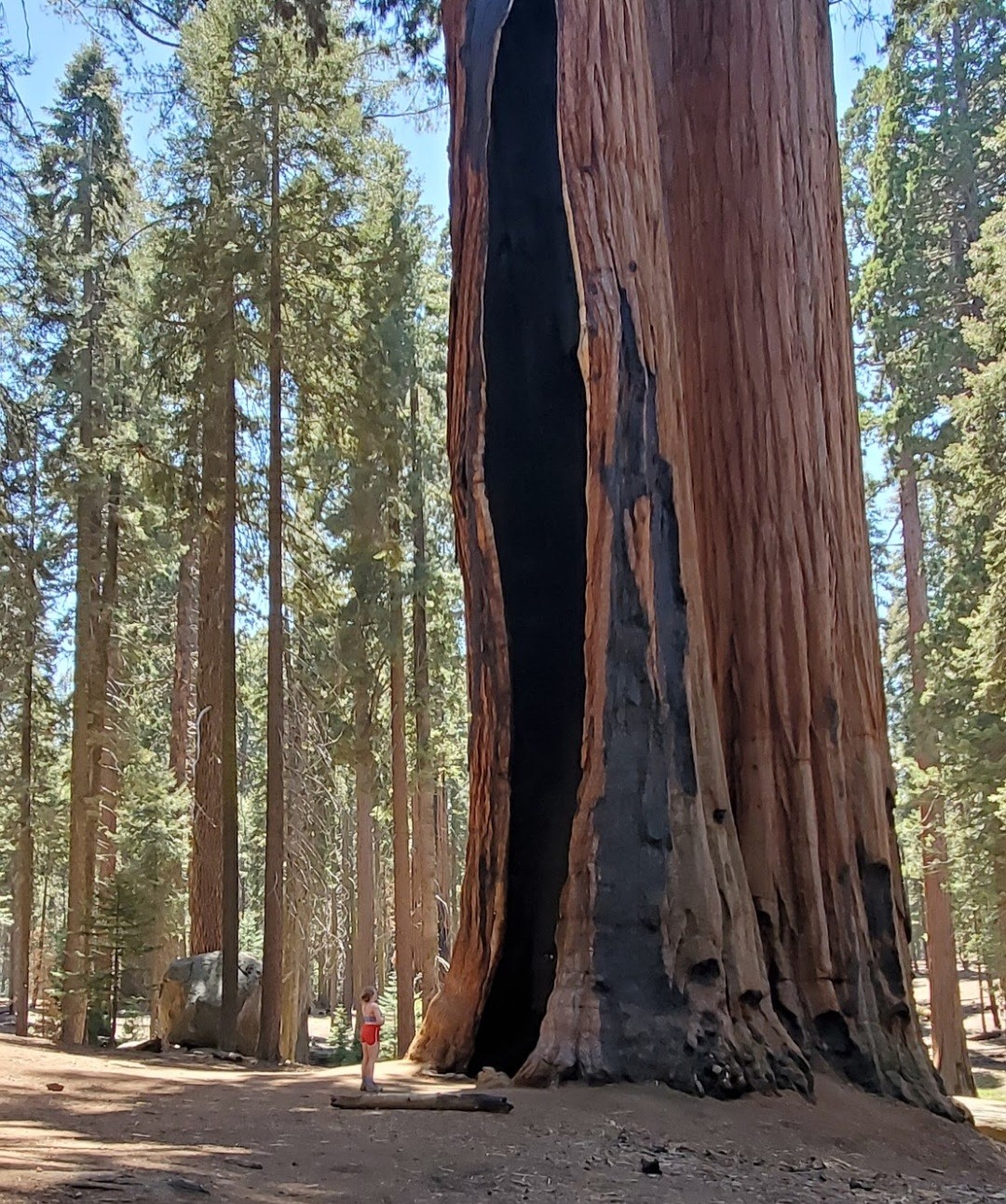
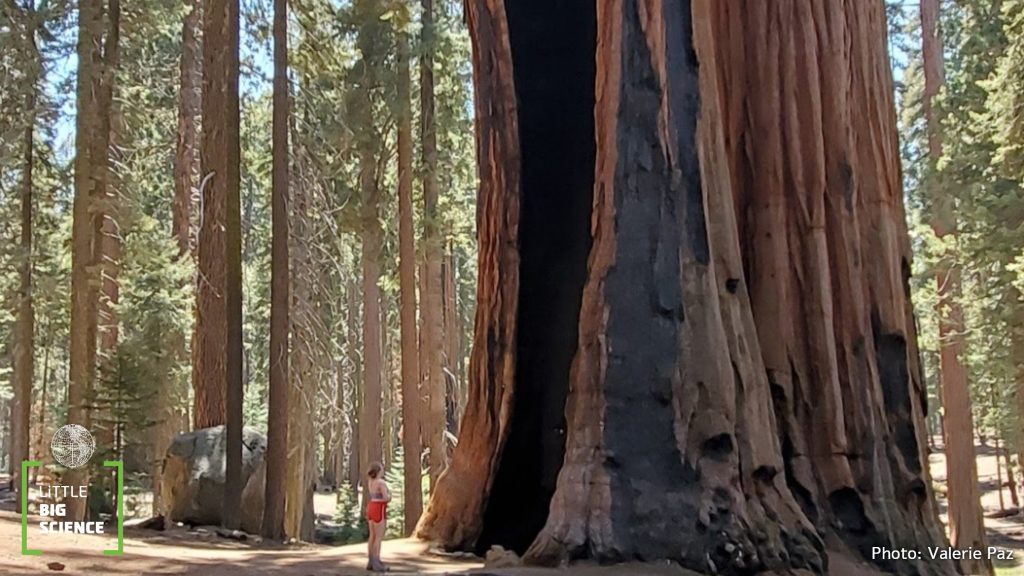
Image 2: A giant sequoia that survived a fire. Photo: Valery Paz. The woman standing before the tree in awe provides a sense of scale.
The tree needs the heat of fires to release seeds and regenerate, and in addition, it is also adapted to survive them. Over the years the trees even shed their lower branches, making it harder for ground fires to “climb” up to the more sensitive parts of the tree. The cones need heat but not direct contact with flames.
For these reasons, park managers realized that not every fire in sequoia groves should be extinguished, and they began conducting prescribed fires to mimic the natural fire cycles on which the trees depend.
Hebrew editing: Shir Rosenblum-Man
English editing: Elee Shimshoni
References:

Coral is an electrical engineer specializing in electro-optics and an avid science enthusiast. She holds an M.Sc. in Electrical Engineering from Bar-Ilan University and a Bachelor's degree in Physics Education from the Technion. For the past three years, she has worked as an engineer in the semiconductor industry. She previously worked in informal science education, a field that is an integral part of her identity.


