Advertisement
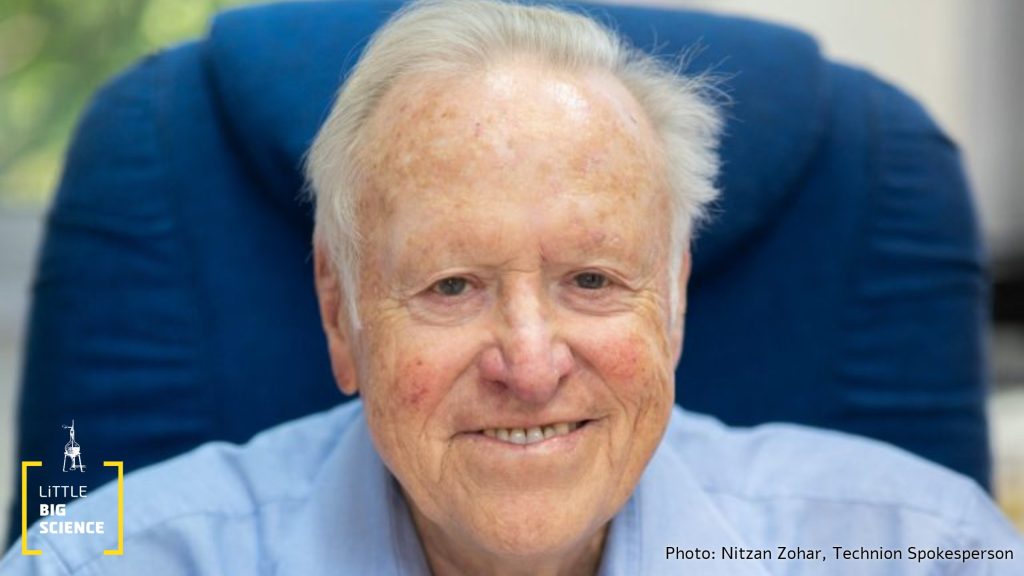
Prof. Yitzhak Apeloig was born in 1944 in Uzbekistan and immigrated to Israel with his family in 1947. He earned his Ph.D. in chemistry from the Hebrew University of Jerusalem in 1974. Two years later he joined the Technion’s Faculty of Chemistry. He served as Dean of the Faculty from 1995–1998 and as President of the Technion from 2001–2009.
His principal contribution to chemistry was the use of computational and quantum tools to predict the properties of organosilicon compounds, which are molecules containing single, double, and multiple bonds to silicon that had previously been deemed impossible. He proposed chemical reactions that would enable the synthesis of these compounds, which are now employed in a wide range of fields, including polymers, medical devices, semiconductors, and renewable energy [1].
Silicon is an element with 14 electrons, located below carbon in the periodic table. While carbon forms single, double, and even quadruple bonds with other elements and with itself, silicon was once thought incapable of doing so. Prof. Apeloig used computational tools to predict silicon compounds containing double and multiple bonds. In his work he demonstrated that silicon can form stable single and double bonds, similar to carbon, by creating molecules called silenes. He developed new methods and was among the first to synthesize and characterize stable silenes via the Sila-Peterson reaction [2], as well as silynes, which are now routinely used [3].
Prof. Apeloig was a pioneer in the computational chemistry of organosilicon compounds and one of the first experimental chemists to employ ab initio quantum-chemical methods. These methods aim to solve the Schrödinger equation using only physical constants, in order to predict molecular structures and possible reactions before any synthesis attempt is made in practice [4]. The idea is that instead of relying on prior experimental data, one can calculate properties and molecular structures directly from the laws of quantum mechanics. With this approach Prof. Apeloig predicted how atoms would arrange in a given material and how the material would react with others, well before any experiment was conducted. His theoretical predictions guided experimental chemists worldwide, and many were subsequently confirmed in experiments.
In addition, together with Prof. Zvi Rappoport of the Hebrew University of Jerusalem, Prof. Apeloig compiled the three-volume encyclopedia “The Chemistry of Organic Silicon Compounds”, regarded as the leading reference in the field [1].
His academic work includes more than 300 reviews and scientific papers in the foremost journals of the scientific literature. Prof. Apeloig received dozens of prizes and honors, among them the Israel Chemical Society Prize (2002), an honorary doctorate from the Technical University of Berlin (2006), the American Chemical Society Award (2009), the Schrödinger Medal (2021), and many others [5].
Prof. Yitzhak Apeloig passed away on 28 May 2026 at the age of 81. May his memory be a blessing.
On a personal note: During my undergraduate studies I had the privilege of attending two advanced organic chemistry courses taught by Prof. Apeloig. His passion for his research in particular, and for chemistry in general, was unmistakable. The corridors of the Faculty will be quieter without the classical music coming out from his office.
Hebrew editing: Smadar Raban
English editing: Elee Shimshoni
References:
-
- The Chemistry of Organic Silicon Compounds, Book by Apeloig and Rappoport
- Substituent effects on the carbon-silicon double bond. Monosubstituted silenes
- Silynes (RC≡SiR′) and Disilynes (RSi≡SiR′): Why Are Less Bonds Worth Energetically More?
- .alpha.-Silicon-substituted vinyl cations. A theoretical ab initio investigation
- Yitzhak_Apeloig, Wikipedia

Shir holds a PhD in electrochemistry from the Faculty of Chemistry at the Technion. Her research focused on the synthesis, characterization, integration into energy conversion devices, and life cycle assessment of biomass waste-based carbon catalysts.


