
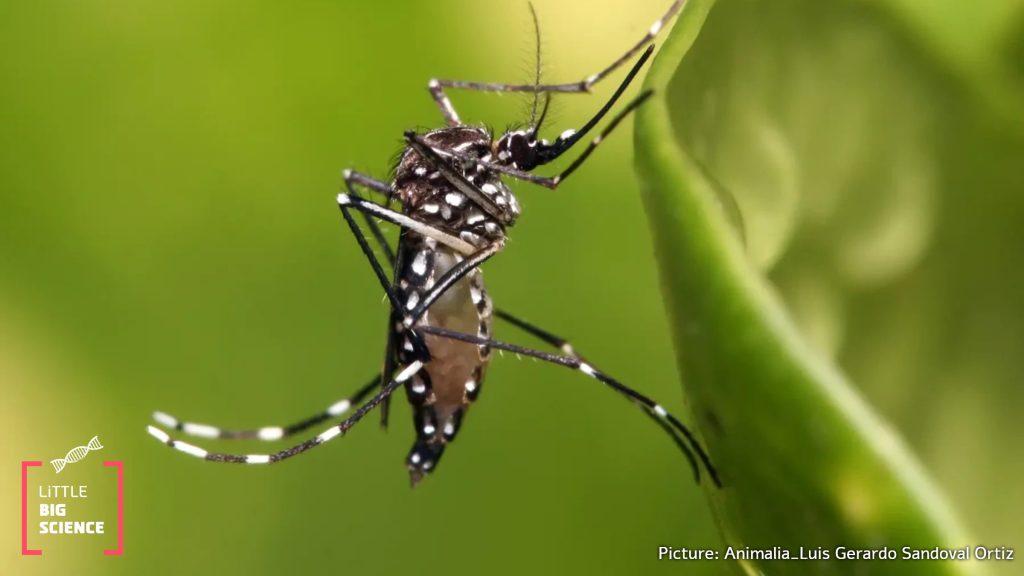
Scientists have discovered a surprising mechanism that regulates the biting behavior of female mosquitoes: A study identified a group of cells located at the very end of the mosquito’s gut. These cells detect when the abdomen is sufficiently full of blood and then signal the brain that it is time to stop—that is, to stop biting and drawing blood. This exciting finding opens up new possibilities, alongside methods already in use, in the fight against one of the world’s most dangerous groups of disease vectors.
Advertisement
Mosquitoes are the most prominent vectors of serious human diseases worldwide, especially in tropical and subtropical regions. Mosquito habitats are expanding because of climate change, urbanization, and population movement, and the areas at risk of infection are expanding along with them [1]. Since mosquitoes, or, more precisely, only female mosquitoes, are considered among the deadliest biological agents to humans, combating them is a major goal of global public health.
How do female mosquitoes transmit disease? A female mosquito bites an infected person or animal; the disease-causing agent reaches her salivary glands and is then transmitted through her bite to the next organism. Female yellow fever mosquitoes (Aedes aegypti) transmit diseases such as dengue fever, Zika, Chikungunya, Yellow Fever, and more, affecting hundreds of millions of people each year [2–4]. Many research avenues are currently being developed to reduce the spread of these diseases by female mosquitoes.
One method, developed by the company Oxitec and already tested in several states across the U.S., is based on releasing large numbers of genetically engineered mosquitoes into the environment [5]. The male mosquitoes carry a “self-limiting gene” that causes their female offspring to die, while male offspring survive and inherit the gene. The company releases many engineered males, which compete with wild males to mate with wild females. When an engineered male mates with a female, her daughters die during the larval stage, before reaching adulthood, whereas her sons continue to carry the gene into the next generation. Thus, with every successive generation, males carrying the gene further reduce the number of females in the population, ultimately leading to a substantial decline in its size.
A similar approach is used by MosquitoMate, which infects male mosquitoes in the laboratory with Wolbachia bacteria. After their release into the environment, the infected males mate with wild females, and because of the bacterial infection, the eggs do not develop and do not hatch at all.
Another approach to reducing disease transmission by female mosquitoes is based on understanding the factors that drive their urge to bite, with the aim of developing effective ways to suppress this urge and thereby stop the chain of infection. Female mosquitoes bite hosts, such as humans and livestock, to consume nourishing proteins from their blood, which are needed for laying healthy eggs. When a female mosquito’s abdomen fills with a sufficient amount of blood, she stops biting.
In an earlier study, researchers discovered that a short protein called neuropeptide Y, known to play a role in regulating hunger and satiety in many animals, is also active in the yellow fever mosquito [6]. What remained unknown was precisely what it does and where it operates. In the current study [7], the researchers discovered, surprisingly, that its activity does not occur in the nervous system, but rather in the rectum—at the very end of the gut. Genetic analysis, combined with fluorescent labeling of different tissues in the female mosquitoes’ bodies, revealed that the receptor sensitive to neuropeptide Y is expressed in unique structures in the rectum, and only there.
These cells were found to be different from the rest of the cells in the gut. In response to calcium and certain amino acids, they can release tiny vesicles containing substances that transmit signals and messages to other cells, much like the way nerve cells communicate with one another. In other words, it appears that when a female mosquito consumes enough blood, cells in the rectum “sense” that her abdomen has filled and send a chemical message to the brain: time to stop. Put differently, the female mosquito’s “satiety switch” has been found. And like good biologists, if we find something important, we now must play with it and perform a few manipulations on it. We found a “switch”? Now we will try turning it on and off ourselves.
Seriously, though—this discovery has considerable practical potential. Unlike the nervous system, the gut is relatively exposed to substances from the external environment. Therefore, follow-up studies may make it possible to design baits containing, for example, chemicals that mimic the activity of female mosquitoes’ “satiety switch”. This could make them feel artificially full before they even approach human skin, preventing the bite in the first place.
In summary, an unexpected place such as a female mosquito’s rectum may become a key component of the global fight against serious diseases, alongside existing methods such as genetically engineered males. This is a complementary, creative, and less invasive approach. Sometimes, ideas for solving the biggest problems are hidden in the smallest details. Our recommendation to future researchers: take an interest in female mosquitoes’ rectums.
Hebrew editing: Smadar Raban
English editing: Elee Shimshoni
References:
- How temperature and climate change affect mosquitoes’ ability to transmit different diseases. Each disease and mosquito species has an optimal temperature range in which transmission is most efficient
- World Health Organization fact sheet on vector-borne diseases
- World Health Organization fact sheet on malaria
- World Health Organization fact sheet on dengue
- Oxitec reports that the initial trials with genetically engineered male mosquitoes were successful
- Article on neuropeptide Y, known to play a role in regulating hunger and satiety, which is active in female yellow fever mosquitoes
- The original research paper discussed here: neuropeptide Y is expressed in the rectal pads of female yellow fever mosquitoes

Maya serves as Scientific Director at "Little Big Science". Maya is a zoologist and an entomologist with a PhD from Tel-Aviv University, currently working as a postdoctoral researcher in the Florida Museum of Natural History, at the University of Florida. Her research focuses on social insects - especially ants - and covers topics such as ecology and invasive biology.


