
Advertisement
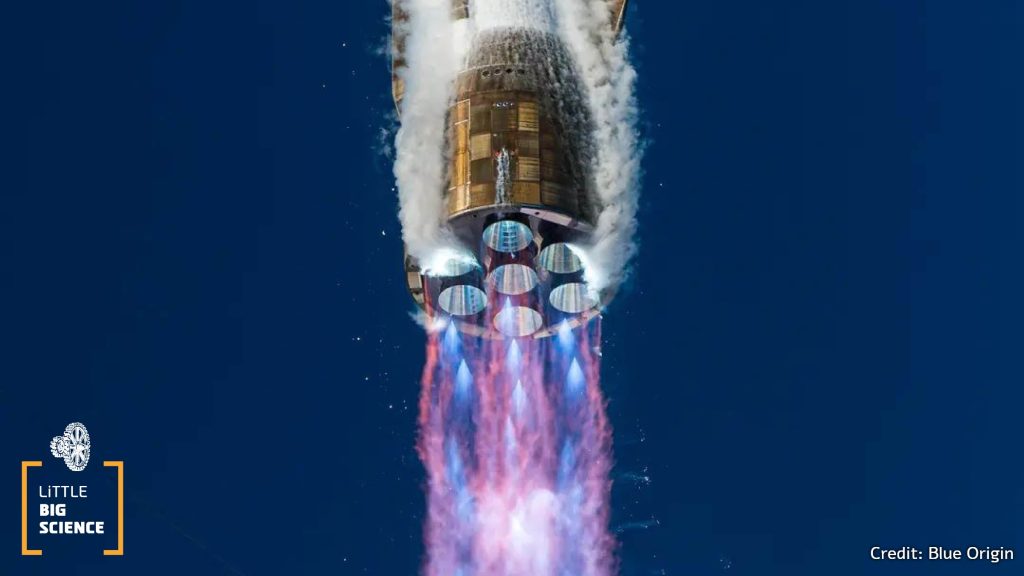
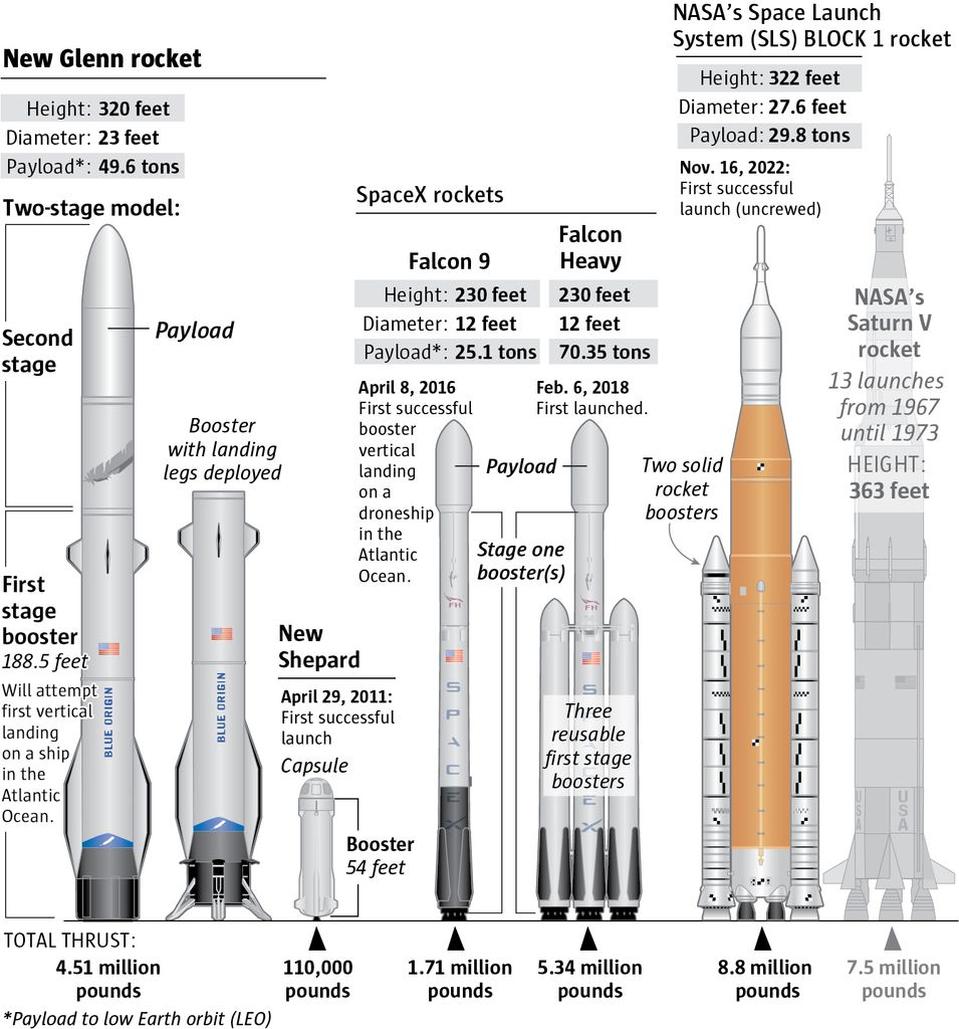
Blue Origin was founded by Jeff Bezos in 2000 two years before SpaceX was established. Until now, Blue Origin was best known for the sub-orbital tourist flights of its New Shepard spacecraft, which received extensive media coverage and carried various celebrities, including Katy Perry and William Shatner [1]. Over the past year, however, the company has introduced a new launch vehicle named New Glenn. Standing 98 meters tall, the rocket is about the height of a 30-storey building, It is named after John Glenn, a combat pilot who fought in World War II and became the first American astronaut to orbit the Earth [2].
Sources: Blue Origin, NASA, SpaceX, CNN, spaceline.org (Mark Nowlin, The Seattle Times)
Source: Blue Origin
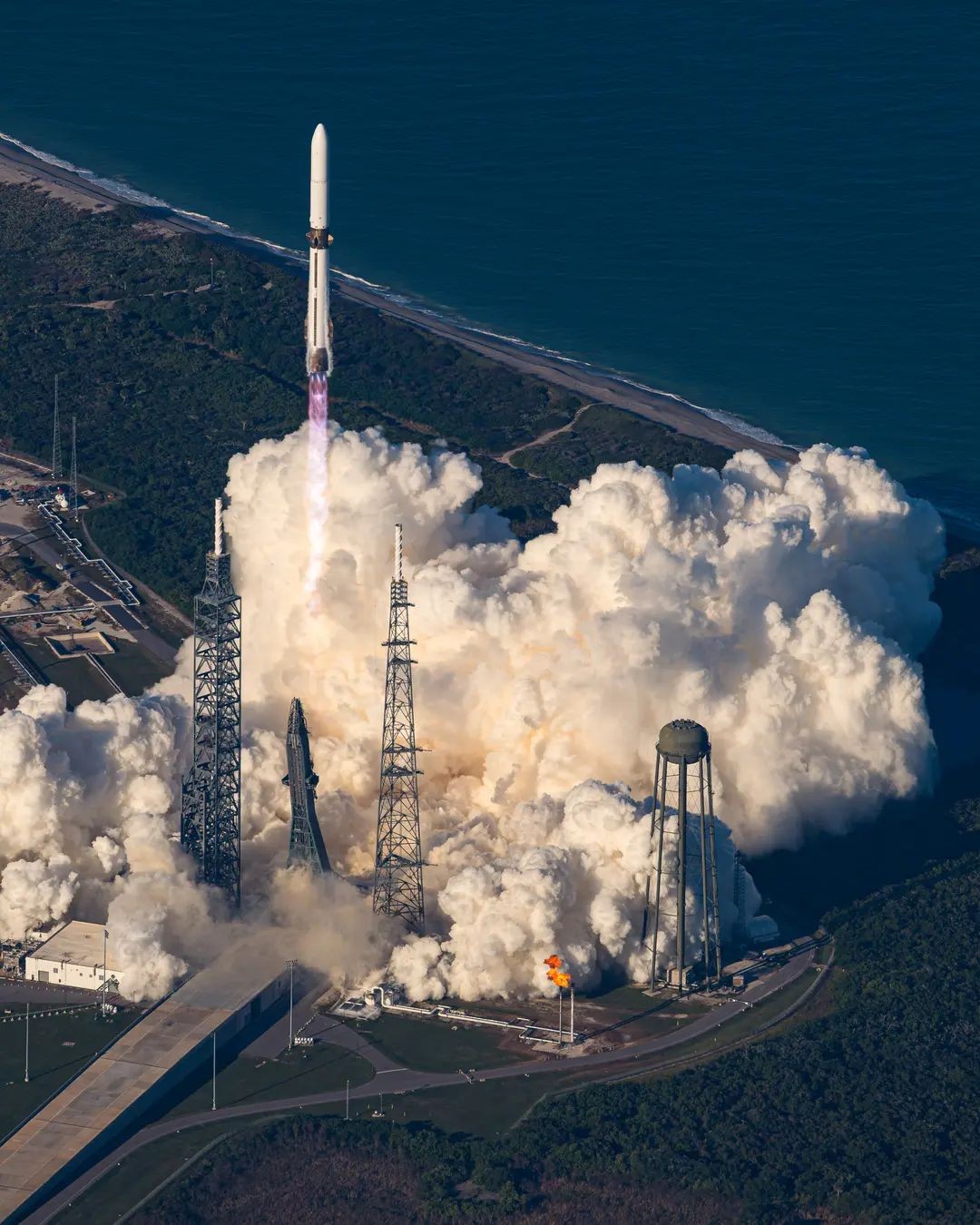
The maiden launch took place in January 2025. Although the rocket successfully reached orbit, the first and most challenging phase of landing the first stage on the sea platform failed. This was due to a malfunction that prevented the engines from restarting in order to slow down the booster upon re-entry. As a result, the booster was unable to decelerate and struck the water at high speed.
The advantage of an ocean landing is that it saves fuel. After liftoff, the rocket follows a broad arc over the ocean, much like a basketball thrown towards a hoop. Returning the booster to the launch site requires course adjustments that consume a l0t of fuel, whereas a sea landing allows the rocket to continue along its natural trajectory. The saved propellant enables the rocket to carry more mass into space [3].
The downside of landing on a sea platform is that it is far more complex than landing on land. There are four main reasons for this: 1. The platform has six degrees of freedom, meaning it can rise and fall, shift sideways, and pitch and roll at various angles. Therefore, the booster must “know” the exact position of the deck in a few seconds, rather than its current position. 2. The platform is relatively small, offering only a few meters of margin for a booster as tall as a multistory building. 3. The open sea environment is uncontrolled and often hostile: strong winds and salty spray can disrupt sensors and engines. It’s like trying to park in New York, except you’re parking an entire building in a constantly moving spot, while children throw water balloons at you. 4. Even after a successful touchdown, the booster could still topple off the platform. Imagine trying to balance a broomstick on your finger. Even the slightest movement of the ship at the moment of landing could cause the booster to tip into the water.
The second launch, on November 13th 2025, was successful, even sending a mission towards Mars. During this flight, Blue Origin managed to overcome the stability challenge of the platform by reducing the time taken to secure the booster to the deck after touchdown.
Because the booster is a huge, hot object that has just descended from a high altitude, it is impossible for the crew to approach and secure it manually. Blue Origin has therefore developed an automatic, ultra-fast solution that is reminiscent of an industrial nail gun. Within seconds of landing, a mechanism located in the booster’s legs activates small pyrotechnic charges, similar to those used for deploying automotive airbags. These charges are fired with enough force to drive metal pins into an anchoring point on the platform, creating an immediate, strong mechanical connection that fuses the booster and platform into a single stable unit.
The next launch is scheduled for early this year and will carry the uncrewed lunar lander Blue Moon Mark 1. This flight will be a technological stepping stone towards the next model, the Blue Moon Mark 2, which is designed to land astronauts on the Moon as part of NASA’s Artemis program [4].
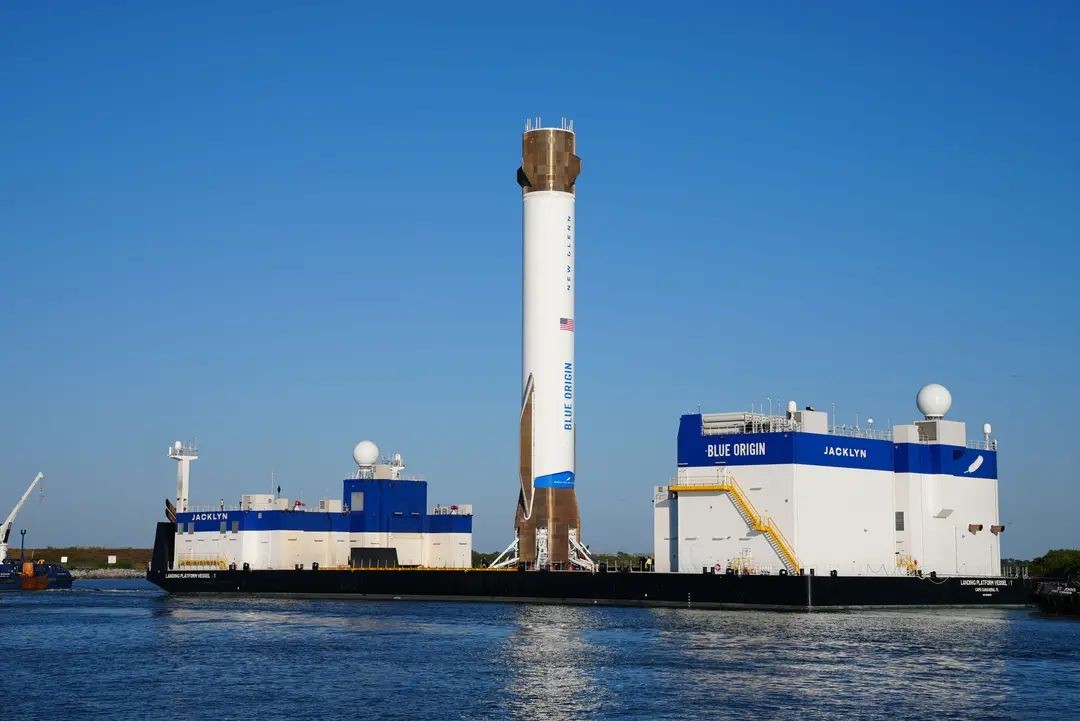
Finally, here is a little anecdote: the sea platform on which the booster lands is named “Jacklyn,” after Jeff Bezos’s mother. Even when they decided to take part in the company’s first and risky flight, Jeff Bezos and his brother made sure to compensate their mother for her sleepless nights.
Source: Blue Origin
Thanks to Tamir Shahar
Hebrew editing: Smadar Reban
English Editing: Gloria Volohonsky
Sources and further reading

Michael is the Vice President of New Media department at "Little, Big Science" and holds a bachelor's degree in Mechanical Engineering as well as a master's degree in Systems Engineering, both from the Technion.


